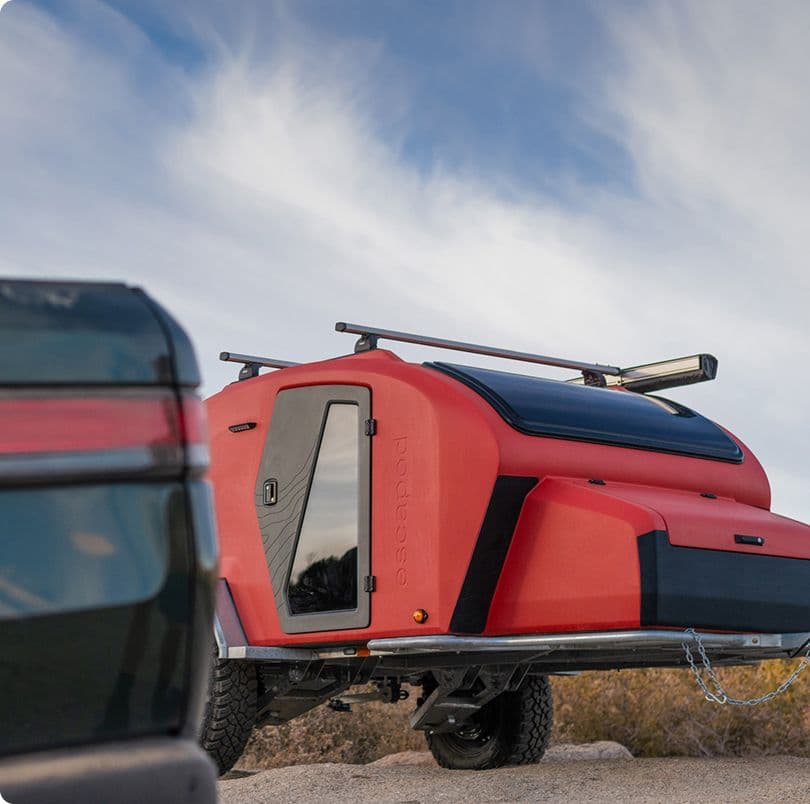
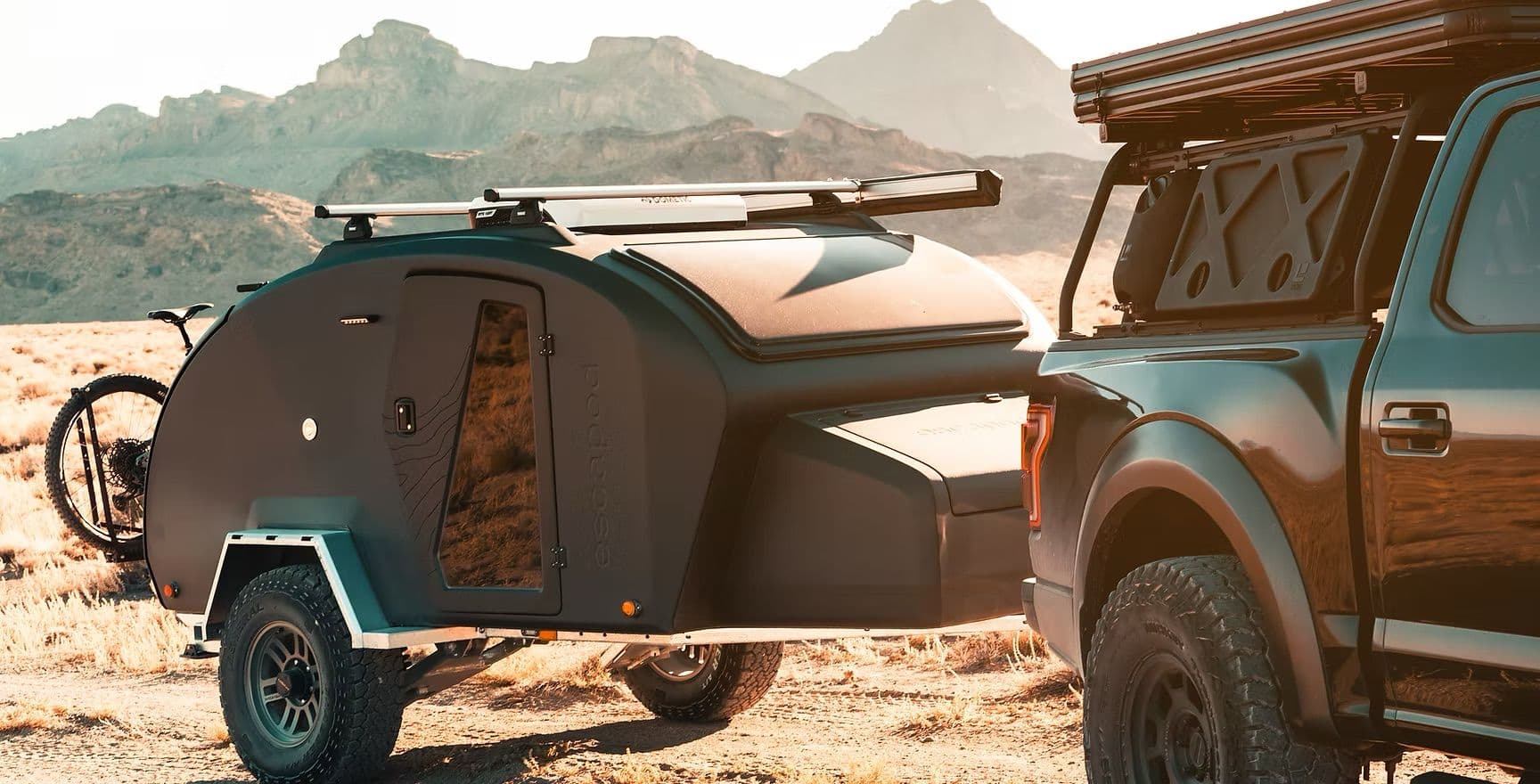
The TOPO2 is a premium off-road camper built to endure. One of the defining features that sets it apart from other teardrop trailers is its body construction. While there are other fiberglass travel trailers on the market, none are built quite like ours. The TOPO2 uses a single-piece composite fiberglass body with an infused structural PET core made from recycled materials — and today, that body is designed and manufactured in-house by Escapod.
Bringing composite manufacturing in-house allows us to control the most critical part of the trailer: the structure itself. It means tighter tolerances, greater consistency from unit to unit, and the ability to stand behind the long-term durability of every trailer that leaves our shop.
How Does Fiberglass Construction Work?
Fiberglass is a durable, reinforced plastic material embedded with woven glass fibers. Before epoxy is applied, fiberglass is a soft, flexible fabric capable of taking on complex shapes. Epoxy resin acts as the bonding agent that hardens the fiberglass into its final form.
When choosing a construction method for the TOPO2, we let our design requirements lead the way: the body needed to be as light, strong, and durable as possible — without compromising aesthetics. We weren’t interested in simply building a fiberglass travel trailer. Our goal was to build the best fiberglass travel trailer on the market.
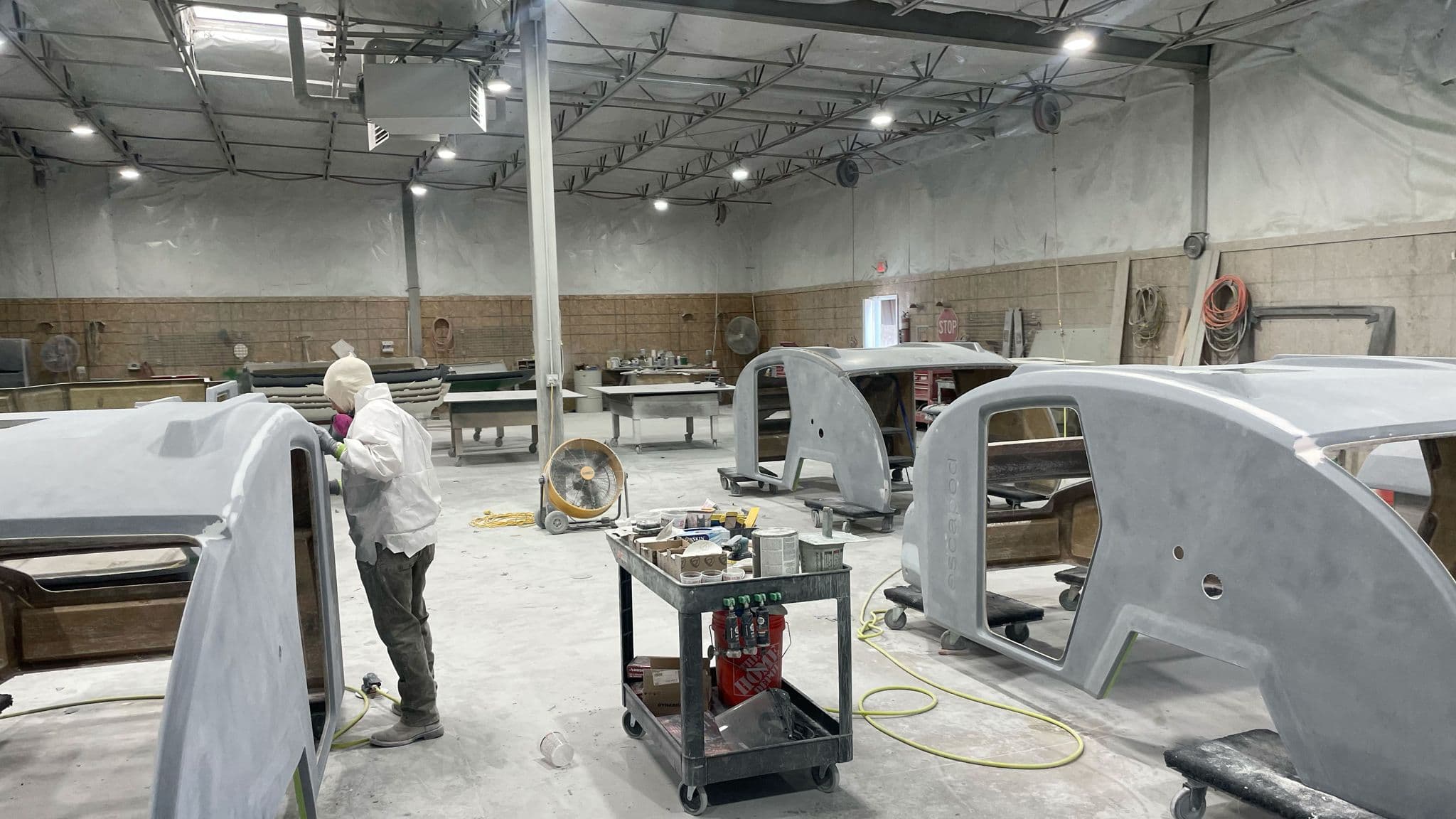
To reduce weight while increasing strength, the body itself had to be structural. Many fiberglass shells on the market are largely cosmetic, relying on a hidden wood or aluminum frame underneath. For the TOPO2, we designed the infused composite core to be the primary structural component of the trailer.
To understand why we chose this approach — and why we now build it ourselves — it helps to look at the three most common fiberglass molding methods used in camper construction.
Chop & Spray
Chop and spray can meet basic requirements for shape and speed, but it falls short when it comes to long-term durability and consistency.
This method uses a pneumatic gun to chop fiberglass strands and spray them, along with epoxy resin, onto a mold surface. It’s commonly used for large-format parts like boats or truck components and is popular because it’s fast and relatively inexpensive.
The downside is that chop and spray does not allow for integrated structural components beyond additional fiberglass layers. Thickness can vary across the surface, making it difficult to achieve consistent weight, strength, and durability — all critical factors for an off-road trailer meant to live far from pavement.
Other teardrop manufacturers chose this route, but not us. Because we wanted a body with predictable performance and built-in structure, chop and spray simply wasn’t precise enough for the TOPO2.
Hand Lay-Up
Hand lay-up is a more labor-intensive process where fiberglass layers are placed into the mold and epoxy is applied manually using brushes or rollers. While some trailers use this method successfully, it wasn’t a fit for our design goals.
Hand lay-up creates a fiberglass shell, but it doesn’t allow for consistent integration of structural core materials. Controlling resin saturation is also difficult, which can lead to over- or under-saturated areas. That variability makes it challenging to achieve the uniform curing and strength required for a structural composite body.
For a trailer designed to handle rough terrain and four-season use, consistency is non-negotiable — and hand lay-up couldn’t deliver it at the level we demanded.
Vacuum Infusion
Vacuum infusion turned out to be our “Goldilocks” solution — and it remains the foundation of how we build the TOPO2 body today.
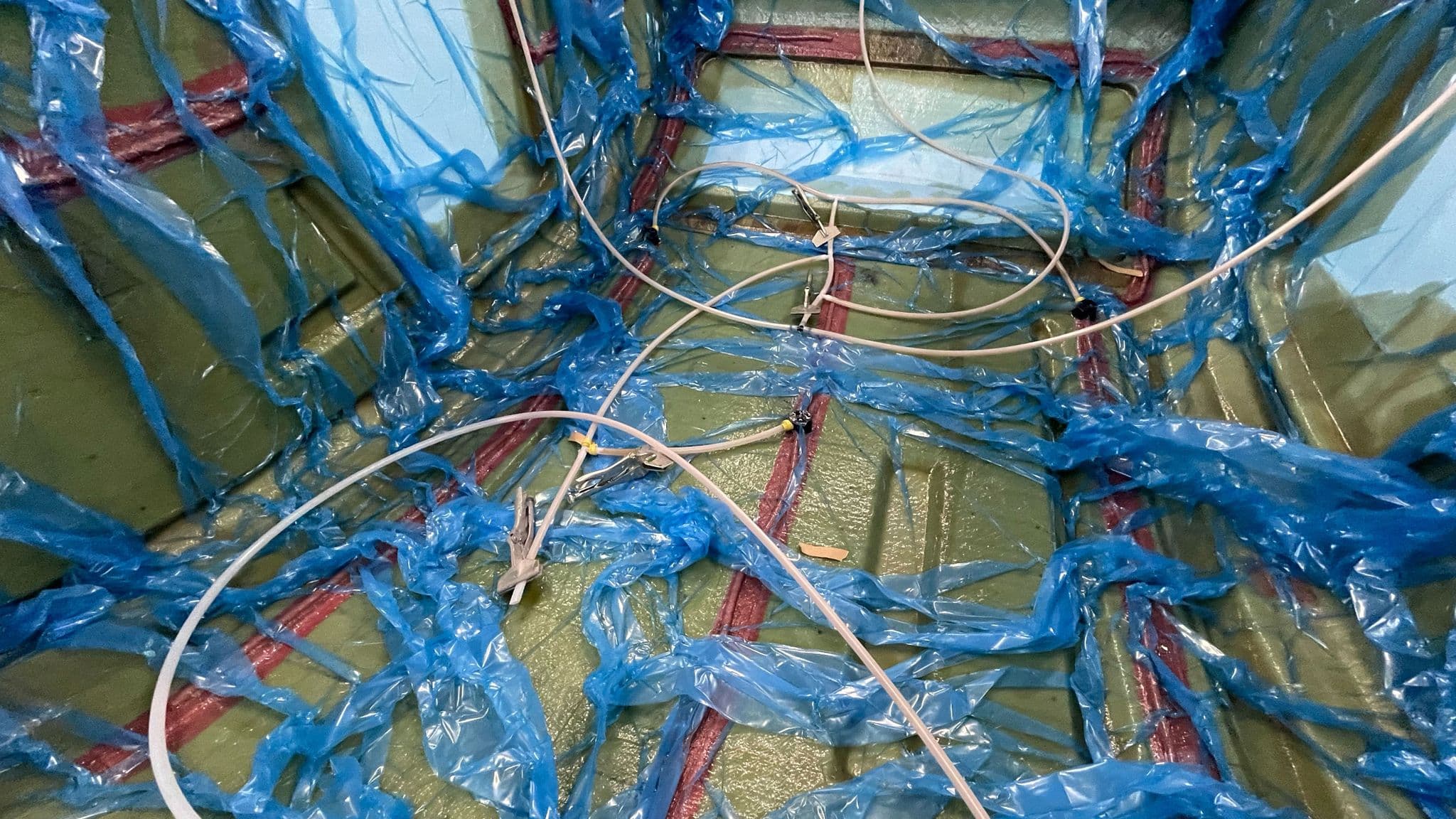
In this process, fiberglass cloth is carefully laid into the mold and secured in place. A vacuum bag seals the mold, removing air and compressing the materials into a tight, uniform lay-up. Epoxy resin is then introduced through controlled ports and drawn evenly through the fiberglass using vacuum pressure.
This method creates precise, consistent resin saturation across the entire body — exactly what we need for strength, weight control, and durability.
Just as importantly, vacuum infusion allows us to integrate additional materials directly into the lay-up. This is how we embed our recycled PET structural core into the fiberglass, creating a single-piece body where the structure is built in, not added later.
By bringing this process in-house, we’re able to control every step — from material selection to curing — ensuring consistent quality and allowing us to continuously refine the process as we learn and improve.
Why We Build the TOPO2 Body In-House
Our engineering team explored every viable manufacturing method before settling on vacuum infusion. Quality, consistency, weight, and strength guided every decision.
Building the composite body in-house allows us to:
- Maintain tighter quality control and consistency
- Reduce variability between trailers
- Improve long-term durability and serviceability
- Stand behind our construction with confidence
The result is a single-piece composite body with fully molded rain gutters and no structural wood — making the TOPO2 sleek, seamless, leak-resistant, and highly resistant to mold and rot.
We chose a more complex, time-intensive, and expensive process because it delivers the performance we expect from a trailer designed for real off-grid use.
Built for the Long Run
We refuse to sacrifice quality in our mission to build the best damn camper known to man. The TOPO2’s composite construction is central to that mission, and bringing this work in-house reinforces our commitment to building trailers that last — not just for the first trip, but for years of adventures to come.
More About the TOPO2
The TOPO2 is a deluxe off-road camping trailer designed to deliver a truly uncompromised camping experience. Its single floor plan is complemented by a thoughtfully equipped interior, including a queen-size bed, 21-gallon water tank, water heater, cabin heater, awning, dual side-entry doors, a large vented stargazer window, LED lighting throughout, YETI cooler on slide-outs, smart charging systems, a 140W solar panel, a 120Ah lithium battery, an 8,500 BTU stove, an 11-lb propane tank, and more.
Optional upgrades like air conditioning, fridge/freezer, rooftop tent compatibility, bike racks, and rock rails allow you to tailor the TOPO2 to your adventures. With a dry weight of approximately 2,000 lbs and a GVWR of 3,500 lbs, it’s towable by many vehicles you already own.
Every TOPO2 is backed by an industry-leading 5-year warranty.
Learn more about the TOPO2 molded fiberglass off-road trailer here.